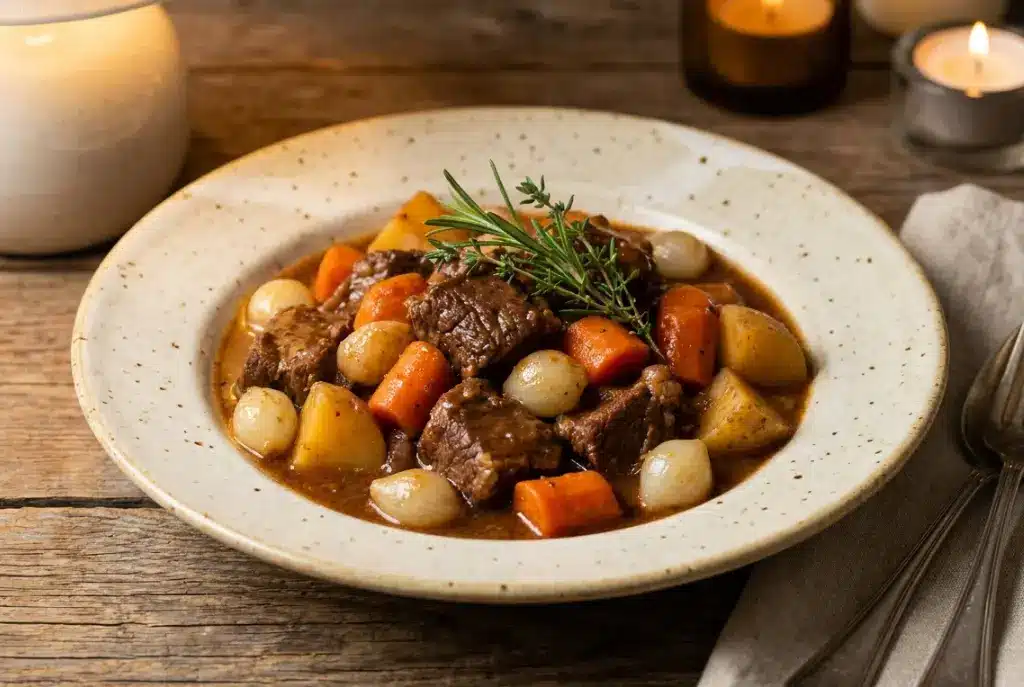
Seasoning stew meat is honestly the single most important thing standing between a pot of sad, bland chunks and a bowl of deeply satisfying, fall-apart beef that makes your whole family go quiet at the dinner table in the best way possible. I’ve been making beef stew since my youngest, Léa, was barely old enough to sit at the table, and it took me years to figure out why mine always tasted a little… flat. Turns out, I was doing the seasoning all wrong. And today I’m sharing everything I’ve learned so you don’t have to suffer through the same bland bowls I did.
You know that feeling when a stew is so good you’re literally mopping up the last drops with a crusty piece of bread? That’s not luck. That’s technique. And it all starts with understanding how to season stew meat properly the right spices, the right timing, the right amounts. Whether you’re making a cozy Sunday pot or a weeknight slow-cooker dinner, this guide has you completely covered.
Best Spices for Stew Meat That Transform Every Bite
The first time I dumped a random assortment of spices into my stew and called it “seasoned,” my husband James took one polite bite and quietly reached for the salt shaker. Mortifying. But that moment sent me down a rabbit hole of figuring out exactly which spices for beef stew actually do the heavy lifting and which ones are just taking up space in your cabinet.
What Are the Best Spices to Season Stew Meat?
For seasoning stew meat, there’s a core lineup that I come back to every single time. Bay leaves are non-negotiable 2 of them for every 3-4 pounds of meat. They add this quiet, almost tea-like depth that you’d miss immediately if they weren’t there.
Beyond bay leaves, here’s my go-to spice list:
- Dried thyme : earthy and herbal, the backbone of any good stew
- Smoked paprika : adds color AND a subtle smokiness that plain paprika can’t match
- Garlic powder : yes, even when you’re using fresh garlic cloves too
- Onion powder : blends into the broth in a way chopped onions don’t
- Black pepper : freshly ground, always. The pre-ground stuff is just… sad.
- Dried rosemary : use it sparingly, it can take over fast
- Worcestershire sauce : technically not a spice, but 1-2 teaspoons is a total game changer for umami depth
I also add 1-2 tablespoons of tomato paste right when I’m browning the meat. It caramelizes in the pan and adds this incredible richness. Melissa, my neighbor who trained as a line cook, actually tipped me off on that one, and I’ve never looked back.
| Spice | Amount (per 3-4 lbs meat) | Flavor Role |
|---|---|---|
| Bay leaves | 2 leaves | Depth, subtle bitterness |
| Dried thyme | 1-2 tsp | Earthy backbone |
| Smoked paprika | 1-2 tbsp | Color, smokiness |
| Black pepper | ½-1 tsp | Heat, sharpness |
| Garlic powder | 1 tsp | Savory, rounded warmth |
| Worcestershire | 1-2 tsp | Umami punch |
How Spice Layering Builds Deeper Beef Stew Flavor
Here’s the part that took me the longest to understand. You can’t just throw all your best spices for beef stew into the pot at once and hope for the best. Flavor layering is real, and it matters enormously.
Think of it in three stages. Stage one: salt and pepper on the raw meat before it ever touches the pan. Stage two: your dry herbs and aromatics go in when you’re building the base right after the onions and garlic soften. Stage three: a final taste-and-adjust in the last 30 minutes, when you can actually evaluate what the finished stew needs.
Each layer serves a different purpose. The first creates a crust. The second infuses the fat and broth. The third fine-tunes. And honestly? The difference between a one-layer stew and a three-layer stew is not subtle. It’s night and day.
Seasoning Stew Meat for Beginners: Zero Guesswork Guide
I get a lot of messages from readers who say they’re afraid of ruining a stew. That fear is so real and so unnecessary. Seasoning stew meat for the first time doesn’t have to be intimidating. I promise. Let me break it down as simply as I possibly can.
How Much Seasoning Should You Actually Add to Stew Meat?
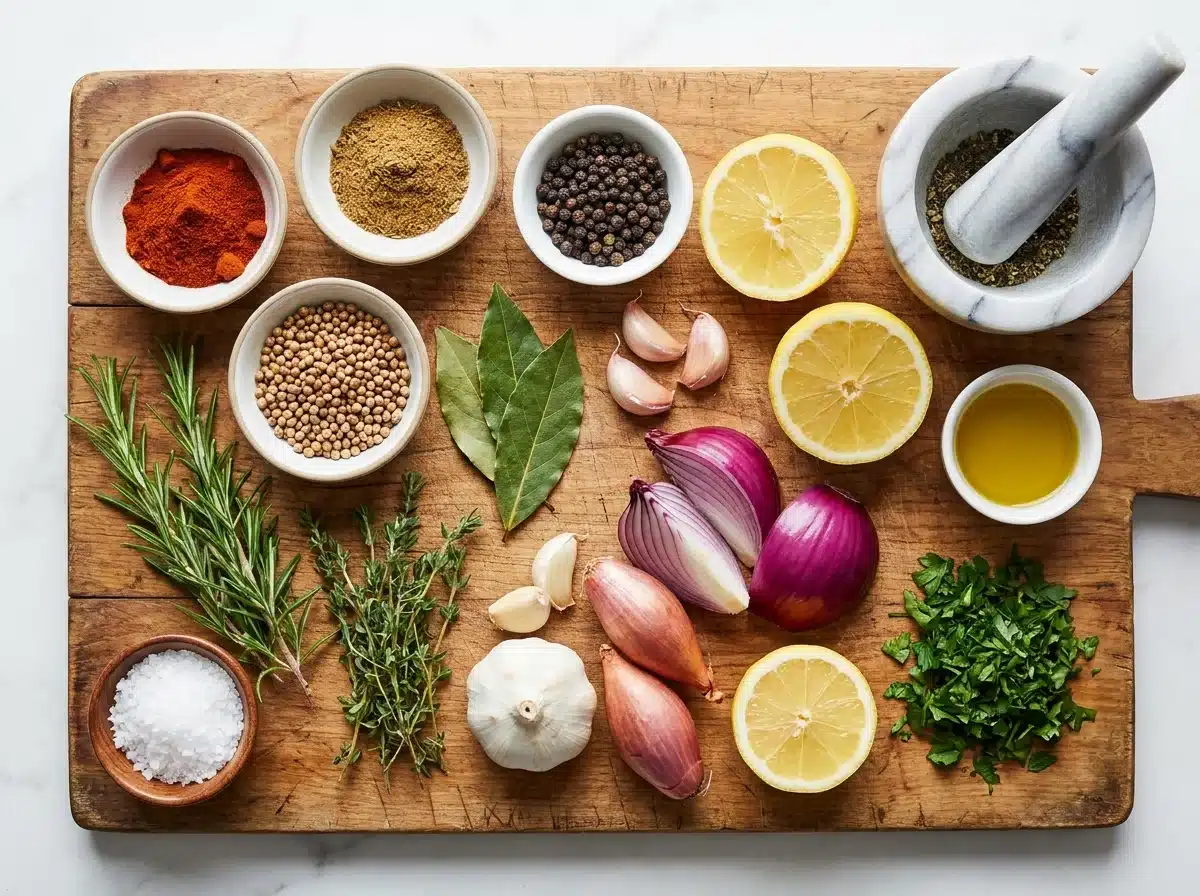
Start here, per 3-4 pounds of stew meat:
- 2 bay leaves
- 1-2 teaspoons dried thyme
- ½ teaspoon dried rosemary
- 1-2 tablespoons smoked paprika
- 1-2 teaspoons salt (kosher salt is my preference)
- ½-1 teaspoon freshly cracked black pepper
- 1-2 teaspoons Worcestershire sauce
- ½ cup roughly chopped onions and 4-5 garlic cloves
These are starting points, not laws. The most important thing? Taste as you go. Simmer for 30 minutes, taste the broth, then decide what it needs. More salt? A pinch more thyme? This is how every great cook seasons not by following exact measurements, but by listening to the pot.
And remember: seasonings concentrate as liquid reduces. So slightly under-season early on. You can always add more. You cannot take it away.
How to Season Stew Meat Without Overpowering the Dish
The number one mistake beginners make and I made this constantly in my early cooking days is over-seasoning upfront and then wondering why everything tastes aggressive and muddy by the time dinner rolls around.
The rule I live by now: add your seasonings in small increments, taste after every addition, and never dump a full tablespoon of anything into a simmering pot without tasting first. It sounds obvious but trust me, the first time you’re cooking with a toddler on your hip and a teenager asking you a question, the instinct is just to pour and stir.
For delicate dried herbs like rosemary and sage, use a light hand. These are assertive. A little goes a long way, especially in a long braise where flavors intensify over hours. For paprika and thyme, you have more room to be generous.
- Always pat your stew meat dry with paper towels before seasoning moisture prevents a proper sear, and a good sear is where so much flavor starts.
- Season from up high when you’re sprinkling dry rubs onto meat it creates a more even distribution than pinching it close to the surface.
- A wooden spoon or silicone spatula is your best friend for scraping up those browned bits at the bottom of the pan that’s pure flavor right there.
- If your stew tastes flat even after seasoning, try a small splash of apple cider vinegar or lemon juice at the end. Acid brightens everything.
- Don’t season your final broth right after adding raw vegetables they release water and dilute the salt level. Wait until they’re mostly cooked before your final adjustment.
Season Before or During Cooking: The Answer Changes Everything
This is the question I see most often in my inbox. And honestly, I spent years getting this wrong myself. I used to season stew meat only at the very beginning and then wonder why the flavor never felt complete. The answer isn’t before OR during it’s both, strategically.
Should You Season Stew Meat Before or During Cooking?
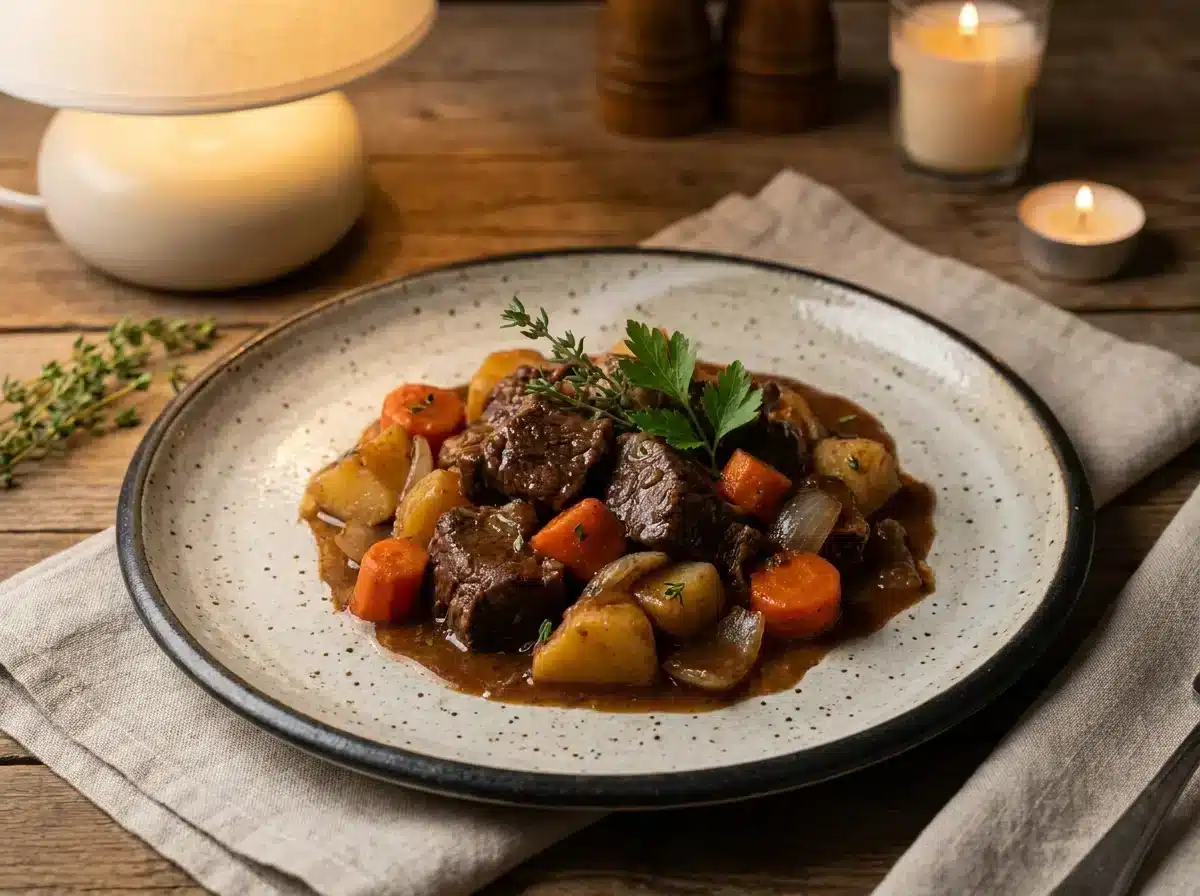
Season twice. Full stop. First, season your raw meat with salt and pepper before it hits the pan. This does two things: it draws out a tiny bit of surface moisture (which then gets reabsorbed, carrying salt deeper into the meat), and it helps build that gorgeous crust when you sear.
Then, add your dried herbs and remaining seasonings when you’re building the aromatics base — after the onions soften but before you add the liquid. This lets the spices toast briefly in the fat, which releases their essential oils and makes the whole broth taste more complex and rich.
Finally, taste and adjust in the last 30 minutes of simmering. By that point, you can actually evaluate the final flavor profile and make targeted corrections. That’s your three-stage seasoning approach and it works every single time.
How Marinating Stew Meat Before Cooking Affects Tenderness
Marinating stew meat is something I started experimenting with after reading about how acids and enzymes break down muscle fibers. And honestly? The results surprised me. A simple overnight marinade — red wine, garlic, thyme, a splash of olive oil made a noticeable difference in texture. The meat was more tender, and the flavor went deeper.
For a basic marinade for how to marinate stew meat effectively:
- ½ cup red wine or beef broth
- 2 tablespoons olive oil
- 3 cloves crushed garlic
- 1 teaspoon dried thyme
- ½ teaspoon black pepper
- 1 bay leaf
Combine everything in a zip-lock bag with your beef chunks, refrigerate overnight, then pat dry before searing. The pat-dry step is critical wet meat steams instead of searing, and you’ll lose that beautiful crust. According to USDA FoodData beef chuck nutritional profile, beef chuck the most common stew meat cut responds especially well to marinating due to its connective tissue content.
Tailored Seasoning Blends for 5 Different Stew Cuisines
One of the things I love most about stew is how it belongs to every culture. The basic technique season, sear, braise is universal. But the spice blends? Completely different worlds. Seasoning stew meat for a French daube feels nothing like seasoning it for a Korean braised short rib, and that’s the beauty of it.
Can You Use Fresh Herbs Instead of Dried Herbs for Stew?
Yes, absolutely but there are a few things to know. Fresh herbs contain significantly more water than dried, so their flavors are less concentrated. The general rule: use 2-3 times the amount of fresh herb compared to what the recipe calls for in dried form. So 1 teaspoon dried thyme becomes about 1 tablespoon of fresh thyme leaves.
Hardy fresh herbs thyme, rosemary, bay leaves hold up well to long braising and can go in early with the aromatics. Delicate fresh herbs parsley, chives, cilantro should only be added in the final 5-10 minutes. They lose their brightness and color fast.
My personal preference? I use dried herbs for the long cook and stir in fresh parsley right before serving. Best of both worlds. The dried herbs build that deep, cozy backbone over hours, and the fresh parsley lifts the whole dish right at the end. Sooo good.
Seasoning Beef Stew Meat for French, Irish, and Asian Styles
Here’s a quick breakdown of how seasoning beef stew meat shifts across different culinary traditions:
| Cuisine | Key Seasonings | Liquid Base |
|---|---|---|
| French (Boeuf Bourguignon) | Thyme, bay, rosemary, black pepper, bouquet garni | Burgundy red wine |
| Irish | Thyme, parsley, bay, Worcestershire, simple salt & pepper | Stout beer + broth |
| American Classic | Paprika, garlic powder, onion powder, thyme, Worcestershire | Beef broth + tomato paste |
| Asian (Korean/Japanese) | Ginger, garlic, soy sauce, sesame oil, star anise | Soy + mirin + broth |
| Mexican | Cumin, chili powder, oregano, chipotle, coriander | Tomato + broth + beer |
My kids grew up eating American-style stew, but when Léa started getting adventurous in her early teens, we started experimenting with the Mexican version on cold December nights. The cumin and chipotle combination with tender beef is… honestly one of my all-time favorites now. Don’t skip the coriander it rounds everything out beautifully.
How Long to Store Seasoned Stew Meat Before It Goes Bad
This is the practical stuff nobody talks about enough. You’ve done the work you’ve seasoned, maybe marinated, maybe prepped your vegetables. Now what? How long can seasoned stew meat actually sit in your fridge before you need to cook it or toss it?
How Long Can You Store Seasoned Stew Meat Before Cooking?
Raw seasoned stew meat should be cooked within 1-2 days when stored in an airtight container in the refrigerator at 40°F or below. That’s the safe window. Beyond that, you’re risking both food safety and flavor quality some of the more volatile spice compounds start to degrade and can actually make the meat smell off even when it’s technically still safe.
For longer prep-ahead situations, I’d recommend seasoning just before cooking rather than days in advance. But a 24-hour seasoned rest in the fridge? That’s actually a good thing. More on that in just a second.
Cooked stew, on the other hand, keeps beautifully:
- Refrigerator: 3-4 days in an airtight container
- Freezer: Up to 3 months the flavors actually deepen over time
When reheating from frozen, thaw overnight in the refrigerator rather than on the counter. Then reheat gently on the stovetop over medium-low heat, stirring occasionally, and do a final taste-and-adjust before serving. A little extra salt or a pinch of fresh thyme can bring a reheated stew right back to life.
Does Pre-Seasoning and Refrigerating Stew Meat Improve Flavor?
Yes and this was one of those genuinely surprising discoveries I made completely by accident. I’d seasoned my stew meat the night before a big family gathering (James’s birthday, actually), planning to cook it the next morning. Life happened, and I didn’t get to it until dinner. The stew that came out of that pot was noticeably better than my usual version. Deeper. More integrated flavor throughout the meat, not just on the surface.
The science behind it: salt draws moisture to the surface initially, but within a few hours, that moisture now carrying dissolved salt and spices gets reabsorbed into the muscle fibers. So seasoning stew meat for flavor actually works better with a little resting time. Even just 4-6 hours makes a difference. Overnight is ideal if you can swing it.
- Always store raw seasoned meat in a glass or stainless steel container plastic can absorb strong spice odors over time.
- If you’re freezing seasoned cooked stew, leave a little headspace in the container liquids expand when frozen.
- Label your containers with the date. I know it sounds obvious, but after a long day, yesterday’s stew and last week’s stew look identical in the freezer.
The One Seasoning Mistake I Fixed That Changed My Stew Forever
Okay. I have to tell you about the stew that almost broke me. It was Christmas Eve my mother-in-law Evelyn was coming for dinner, the kids were bouncing off the walls, and I was so confident in my stew. I put it on the table, took a bite… and it tasted like salt. Just. Salt. Every other flavor had disappeared. I nearly cried into my Dutch oven.
That night taught me more about seasoning stew meat for slow cooker and stovetop methods than any cookbook ever had.
What Should You Do If You Over-Seasoned Your Stew?
Don’t panic. Seriously. Over-seasoned stew is fixable more often than you’d think. Here’s my rescue protocol, in order of what to try first:
- Dilute with unseasoned broth: Add ½ cup of plain beef broth at a time, stir, simmer 10 minutes, taste. Repeat until balanced. This is usually all you need for mild over-seasoning.
- Add bulk vegetables: Cubed potatoes and carrots absorb salt like little sponges. Add them in, let them simmer until soft, then remove if the texture is off they’ll have absorbed a good amount of the excess salt.
- Add acid: A tiny squeeze of lemon juice or a splash of apple cider vinegar can cut through saltiness and rebalance the flavor profile. Start with just ½ teaspoon and taste.
- The sugar trick: A pinch of sugar ¼ teaspoon maximum works well in tomato-based stews to counterbalance saltiness. Don’t overdo it.
And going forward? Season in layers. Taste frequently. Add ¼ teaspoon at a time, not tablespoons. Your future self and your dinner guests will thank you.
Why Blooming Spices in Fat Is the Secret to Richer Beef Stew
This is genuinely the one technique that changed everything for me. Blooming spices adding your dried herbs and ground spices to hot fat in the pan before adding liquid wakes them up in a way that simply adding them to broth never can.
Fat is a solvent for flavor compounds. Many of the aromatic molecules in spices (like the thymol in thyme, the capsaicin in paprika) are fat-soluble, meaning they only fully release their flavor when they make contact with fat and heat. When you add dried thyme straight to water-based broth, you only get a fraction of the potential flavor. But when it hits hot olive oil in a pan for even 30-60 seconds first? The aroma that comes off the pot is incredible. You can actually smell the difference.
Next time you’re making stew, try this: after softening your onions, push them to the sides of the pan, add a tiny extra drizzle of oil to the center, then add your dried herbs and spices directly to that hot oil. Stir for 30 seconds until fragrant, then immediately add your liquid. That smell — warm, toasty, rich — is the flavor you’re about to taste in every spoonful.
Absolutely! The key adjustment is to still sear the meat and bloom your spices on the stovetop first don’t skip those steps even when using a slow cooker. Transfer everything to your slow cooker, add your broth and vegetables, and cook on LOW for 7-8 hours or HIGH for 4-5 hours. Taste and adjust seasoning in the last 30 minutes. Slow cooking is actually fantastic for stew because the long, low heat gives seasonings more time to deeply penetrate the meat.
I’ve been making beef stew for over fifteen years, but my real turning point came the winter Léa was about seven years old. She refused to eat anything “with chunks in it” her exact words and I was determined to make a stew she’d actually love. I started paying obsessive attention to seasoning, because I realized that if the flavor was incredible enough, she’d stop focusing on the texture. I burned the first batch. Completely. Served it anyway with extra bread, called it “rustic.” By the fourth or fifth version, I had something genuinely special. Léa ate two bowls. That stew, seasoned properly and built in careful layers, is basically the recipe I still use today. Every adjustment I’ve made to how I season stew meat comes from that cold winter in my kitchen, trying to win over a picky seven-year-old.
Frequently Asked Questions About Seasoning Stew Meat
The best spices for stew meat include bay leaves, thyme, rosemary, smoked paprika, black pepper, garlic powder, and onion powder. For a 3-4 pound batch, use 2 bay leaves, 1-2 teaspoons thyme, 1-2 tablespoons paprika, and add Worcestershire sauce and tomato paste for extra umami depth. Layer your seasonings throughout cooking rather than adding everything at once for the best results.
Per 3-4 pounds of stew meat, start with: 2 bay leaves, 1-2 teaspoons dried herbs, 1-2 tablespoons paprika, 1-2 teaspoons salt, ½-1 teaspoon black pepper, and 1-2 teaspoons Worcestershire sauce. Slightly under-season early since flavors concentrate as liquid reduces. Always taste at the 30-minute mark and adjust incrementally — ¼ teaspoon at a time — rather than large additions.
Both — and this two-stage approach is the key to deeply flavored stew. Season raw meat with salt and pepper before searing for a better crust and initial flavor. Then add your dried herbs and aromatics when building the base, allowing them to bloom in fat. Do a final taste-and-adjust in the last 30 minutes of cooking when you can evaluate the true flavor balance of the finished dish.
Yes! Use 2-3 times the amount of fresh herbs compared to dried — so 1 teaspoon dried thyme becomes 1 tablespoon fresh. Add hardy herbs like rosemary and thyme early in the cooking process, but stir in delicate herbs like parsley only in the last 5-10 minutes to preserve their bright, fresh flavor. A combination of both dried (for depth) and fresh at the end (for brightness) is honestly my favorite approach.
Add unseasoned beef broth ½ cup at a time to dilute, or add bulk vegetables like potatoes and carrots that absorb excess salt. A tiny pinch of sugar (¼ teaspoon) balances saltiness in tomato-based stews, and a small splash of acid (lemon juice or apple cider vinegar) can rebalance the overall flavor. Going forward, always season gradually and taste frequently rather than adding large amounts at once.
Raw seasoned stew meat can be safely refrigerated for 1-2 days in an airtight container at 40°F or below. A 24-hour seasoned rest actually improves flavor as the salt and spices penetrate deeper into the meat. Cooked stew keeps in the refrigerator for 3-4 days and freezes well for up to 3 months. Always thaw frozen stew overnight in the refrigerator before reheating.
Wrapping It All Up
Seasoning stew meat isn’t magic but it can feel like it when you get it right. Everything we’ve covered today: the right spices, the layering technique, the timing, the storage, the rescue plan for when things go sideways… all of it builds on one core idea. Flavor takes time and intention. It doesn’t happen by accident.
I hope this guide gives you the confidence to walk into your kitchen this weekend and make the most flavorful, deeply satisfying stew you’ve ever tasted. Whether you’re making it for a cozy family Sunday dinner or prepping it ahead for a holiday gathering, mastering seasoning stew meat will genuinely change the way you cook.
If you want to learn more about who I am and why food means so much to me, come say hi on my About Me page. And if you’ve got questions or just want to share how your stew turned out, I’m always reading my Contact page seriously, I love hearing from you. Happy cooking, friends!
I’d love to hear from you! What’s your favorite spice or secret ingredient when seasoning stew meat? Do you have a family blend that’s been passed down, or a surprising addition that nobody expects? Drop it in the comments I read every single one!

Seasoned Beef Stew
Ingredients
Main Ingredients
- 3-4 lbs beef stew meat Cut into chunks
- 1/2 cup onions, roughly chopped
- 4-5 cloves garlic, crushed
Seasonings
- 2 leaves bay leaves For depth of flavor
- 1-2 tsp dried thyme Earthy backbone
- 1-2 tbsp smoked paprika Adds color and smokiness
- 1-2 tsp Worcestershire sauce For umami depth
- 1 tsp garlic powder Boosts savory flavor
- 1/2-1 tsp black pepper Freshly ground
- 1/2 tsp dried rosemary Use sparingly
- 1-2 tsp salt Kosher preferred
- 1-2 tbsp tomato paste Stir into meat during browning
Instructions
Preparation
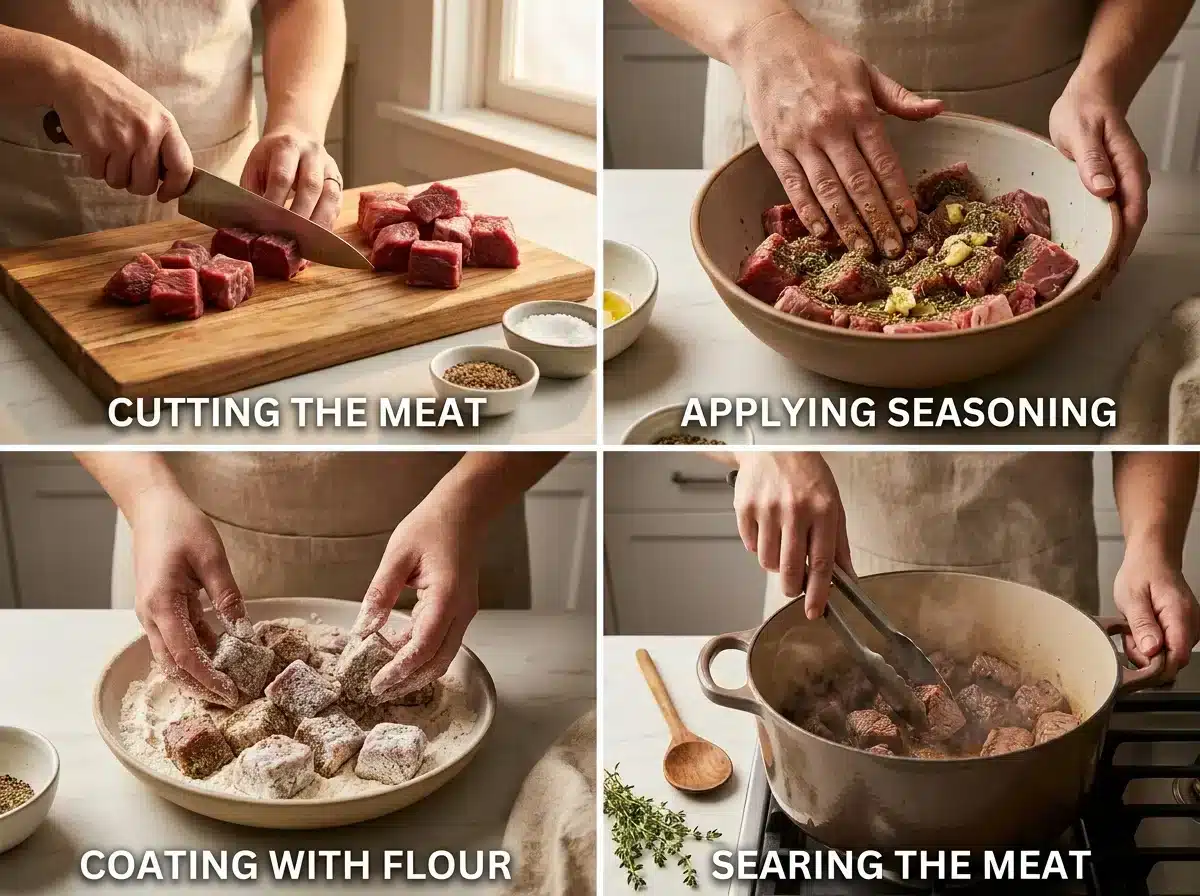
- Pat the beef stew meat dry with paper towels.
- Season the meat evenly with salt and black pepper.
- In a large pot or Dutch oven, heat oil over medium heat and brown the meat on all sides.
- Add tomato paste to the pot and stir until caramelized.
- In the same pot, add onions and garlic, sauté until softened.
Cooking
- Add dried thyme, smoked paprika, bay leaves, and Worcestershire sauce to the pot.
- Pour in enough liquid (beef broth or water) to cover the meat.
- Bring to a simmer, cover, and reduce heat to low for about 1.5 to 2 hours, or until meat is tender.
- Taste and adjust seasoning in the last 30 minutes of simmering.